
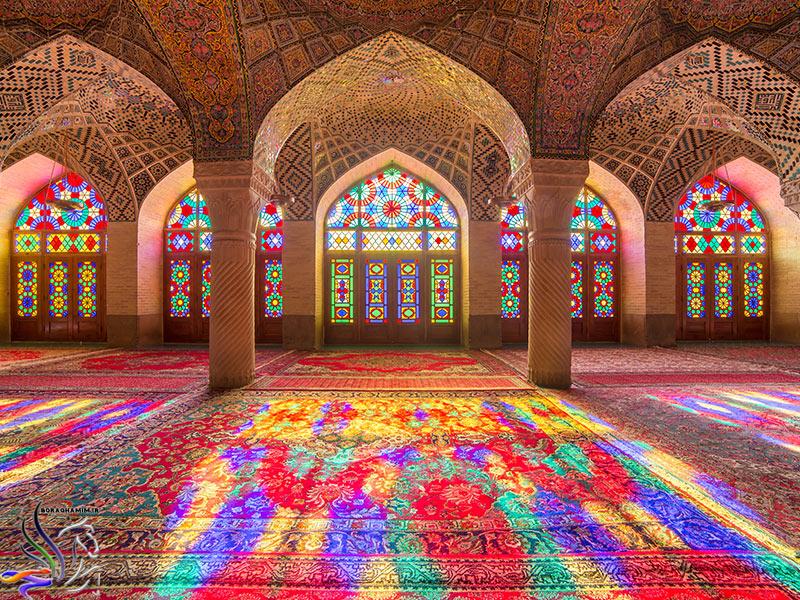
Iran is a country with a very rich history and culture, which has very beautiful and diverse works of art in the field of mosque architecture.
According to the report of Borah Hamim art news site , Iran has a very rich history and culture, which has very beautiful and diverse works of art in the field of mosque architecture . Below, we mention some of the artistic and well-known mosques in Iran:
- Imam Mosque (Imam Khomeini Mosque) – Tehran:
One of the largest and most famous mosques in Iran, located in Tehran, is known by the name of Imam Khomeini, the leader of the Islamic Revolution. The beautiful and Islamic design of this mosque is very important considering its size and historical value.
- Sheikh Lotfollah Mosque – Isfahan:
A mosque with a beautiful and artistic design in the city of Isfahan, which benefits from the beautiful effects of Iranian architecture. The wooden roof of this mosque is one of its beauties.
- Golestan Mosque and School – Kashan:
This mosque and school is known for one of the most beautiful Islamic and earthquake architectures in Iran. A lot of beauty can be seen in this place from carved walls and a very beautiful palace.
- Nasir al-Molk Mosque and School – Shiraz:
One of the historical and artistic mosques of Kashan, which was built by the order of Nasir al-Mulk, the Seljuk minister, in the Islamic period. The architecture and the beauty of the works of art in this place have a unique beauty.
- Shah Mosque (Imam of Shah Mosque) – Isfahan:
One of the most beautiful and famous buildings in Iran, which was built by order of Shah Abbas I during the Safavid period. Beautiful architecture, many brick works and artistic decorations are the characteristics of this building.
These are just a few examples of Iran’s artistic mosques, and Iran has many mosques and other works of art with very beautiful architecture and history that can attract tourists and those interested in art, history, and architecture.
Islamic Architecture
Islamic architecture in Iran has a beginning that was formed with the arrival of Islam and the establishment of Islamic governments in this land. These influential periods in the history of Islamic architecture in Iran include the Umayyad, Abbasid, Seljuk, local royal and Safavid periods.
This architecture has evolved with great variety throughout history due to cultural, religious, social, and artistic factors. In the Umayyad and Abbasid periods, Arab and Eastern influences were evident in Islamic architecture, and models of Arab countries’ architecture were transferred to Iran. In the following periods, Islamic architecture in Iran was formed under the influence of local factors and ruling dynasties such as the Seljuks, the Ilkhanids, and the Safavids, and was gradually integrated into the heavy legacy of previous arts and cultures.
The Safavid era, especially the reign of Shah Abbas I and the height of the Safavid Empire, was a time of magnificence in Islamic architecture in Iran. Works such as the Imam Mosque and the antiques of Isfahan are famous from this period, which represented the capabilities of Iranian art and architecture at that time.
In general, Islamic architecture in Iran has been influenced by various cultures and history from the early Islamic centuries to the contemporary era and has always been evolving and changing, with elements that draw from the elements of Islamic architecture against different cultural backgrounds.


More Stories
Discovery of 1,700 Historical Artifacts at Al-Juhfah
Nasir al-Mulk Mosque: Masterpiece of Light and Color
Digital Reconstruction of the Lighthouse of Alexandria Begins